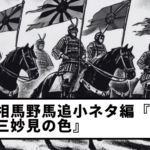
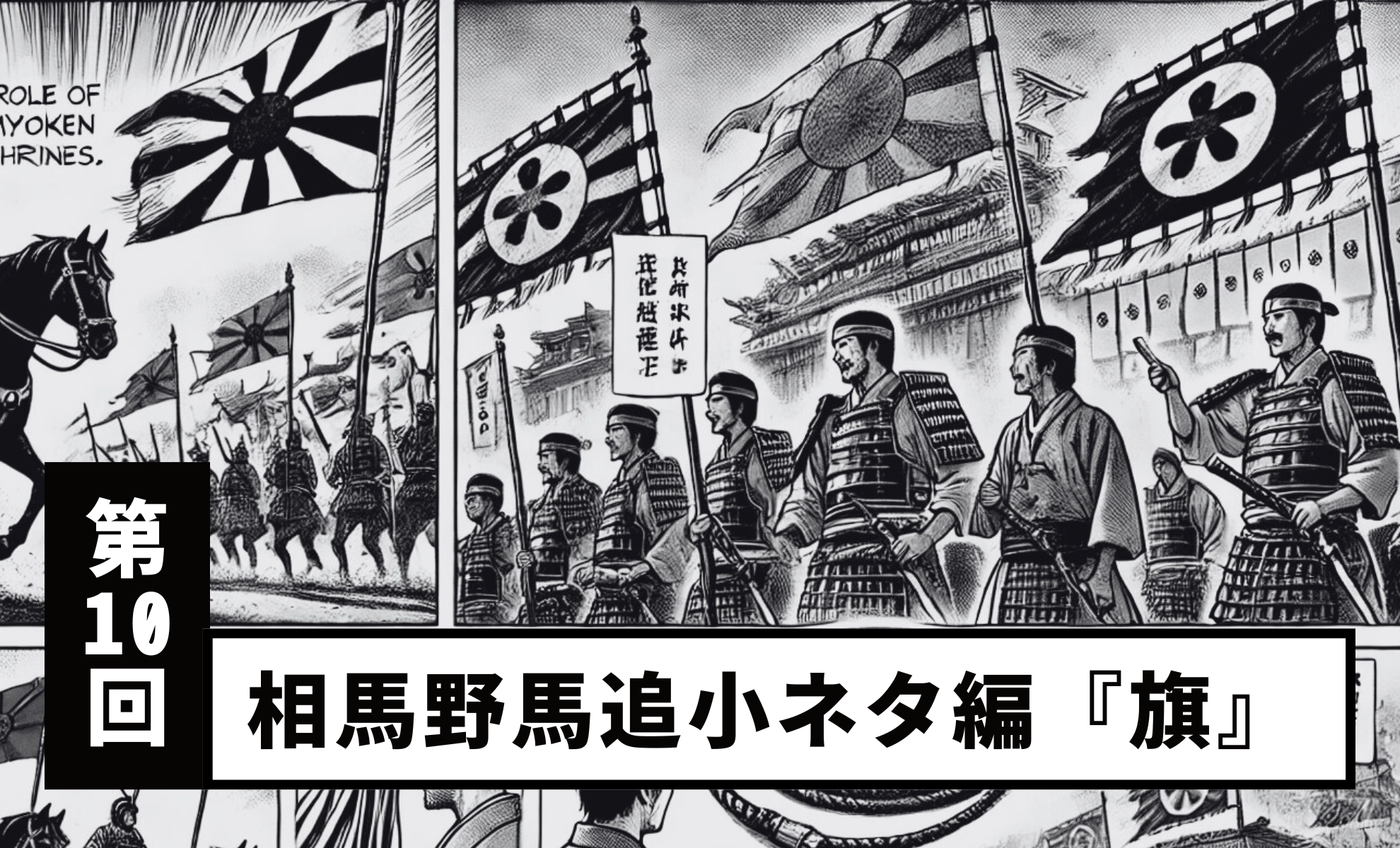
The procession and sacred flag competition of the Soma Nomaoi feature flags carried by mounted warriors as one of their major attractions. How many different types of these flags exist, and what meanings are imbued within them?
Flags with 2,500 Different Designs
The designs of the flags appearing in the Nomoi number an astonishing 2,500 varieties. Each flag bears the family crest or distinctive symbol of its respective clan, differing in color and pattern. Simply taking the time to observe this diverse array of designs allows one to sense the profound depth of the Nomoi.
The Reason for So Many Flags
The role of the flags is not merely decorative; they represent the “mark of the family.” Historically, there was a rule prohibiting the use of flags with identical patterns or colors. This had practical reasons.
To distinguish individuals
During the Nomoi, held across vast open fields, the sheer number of participating mounted warriors makes flags function like name tags. Especially during events like the sacred flag contest, where multiple mounted warriors move simultaneously, the flags allow one to instantly see who is where.
Flags Indicating Roles
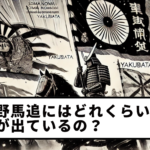
Beyond family emblems, there are also “role flags” (yakubata) indicating positions. Each role flag design carries specific meaning, such as:
- Strategist: Black centipede on a rust-colored background
- Group Leader or Middle Leader: Descending horse
- Messenger: Black ground with a single white character “一”
Learning these role flags will enhance your enjoyment of the Nomaoi procession.
Flag Size: Adaptation for the Vast Field
The flags used in the current Nomaoi are quite large, measuring approximately 3 shaku (about 91 cm) wide and 4 shaku 5 sun (about 136 cm) tall. This size is a practical adaptation to ensure the mounted warriors carrying the flags can be easily distinguished from a distance, even within the expansive fields where the Nomaoi takes place.
Compared to flags seen in period dramas, Nomaoi flags are noticeably larger and more imposing. This sense of scale is another distinctive feature unique to the Nomaoi.
![[Part 3] Among the warriors participating in the Nomaoi festival, who is the most senior?](https://en.soma-nomaoi.com/wp-content/uploads/2024/10/vol3_title-150x150.png)