
The Soma Nomaoi is not merely a festival where horses gallop and flags are seized. It is a living scroll of warriors, conveying the traditions and aesthetics of the samurai into the modern era. Supporting its dignity are the costumes worn by the mounted warriors and the words they exchange.
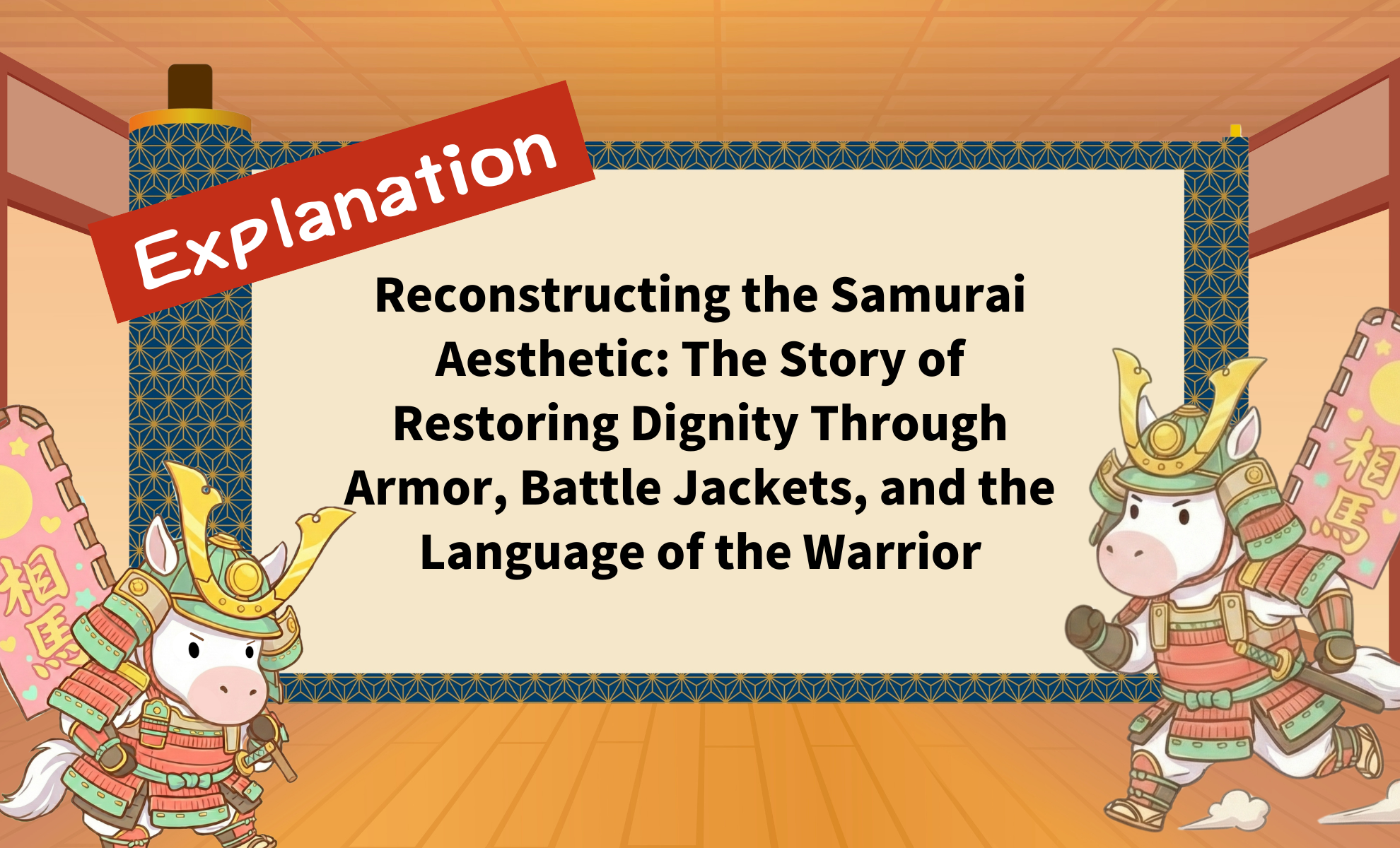
This article explores the efforts to maintain and restore the dignity of tradition, and the pride of the samurai embedded within it, through the regional variations in costumes at the Nomaoi and episodes of the “samurai language” reconstructed by former military strategist Mr. Nakajima Miki.
1. Regional Colors: The Aesthetics of Armor and Battle Jackets
The Soma Nomaoi is composed of five distinct “villages” (gō), each possessing its own unique traditions and roles. These regional differences are clearly reflected in the costumes of the mounted warriors.
District Classification Main Costume Features and Background Naka-no-Gō and South Light “Jinbaori” Style emphasizing mobility. Kita-gō and Uda-gō Heavy “Armor” Emphasizing the dignity befitting the domain lord's immediate vicinity.
As the military strategist commands all these districts, he must be mindful of each district's traditions. The episode where the new military strategist, Mr. Mitsukiyo Monma, did not rigidly adhere to the style of his native Naka-no-Gō but instead incorporated requests from other districts by greeting them in full armor, demonstrated crucial coordination skills and political judgment in fostering organizational harmony.
2. Revival of “Samurai Language”: Creating Tradition
The greatest contribution to restoring the dignity of the Nomaoi was the reconstruction of “samurai language” by former military strategist Mr. Nakajima Miki.
2.1. A Tradition on the Verge of Decline
When Mr. Nakajima was young, participants' speech resembled everyday conversation, such as “○○-annya (Bro), let's go,” and the solemnity befitting a samurai festival was fading. He lamented this state and felt a deep need to restore the “dignity” the Nomaoi should possess.
2.2. Reconstruction Through Self-Study and Workshops
Mr. Nakajima studied “samurai language” and conduct befitting the Nomaoi through NHK period dramas and historical programs, teaching himself. To instill this in participants, he held study sessions and provided thorough instruction.
This effort was not merely a recreation of past traditions; it could be called the “creation of tradition.” He re-staged phrases and expressions that had nearly fallen into disuse, adapting them into forms fitting for the modern Nomaoi.
“We don't want visitors coming from all over the country to see us and think, ‘What's with that event?’”
Mr. Nakajima's words reveal his strict stance, aiming to balance the event's role as a tourist attraction with the pride of a samurai. Eleven years of painstaking effort to maintain visual aesthetics—including banning baseball caps in the procession—laid the foundation for the orderly Nomaoi we see today.
3. Efforts to Maintain and Restore Tradition
The aesthetics of the Nomaoi are not static. They are the result of the “staging efforts” of pioneers like Mr. Nakajima and are maintained and restored daily through the “adaptive skills” of active warriors like Mr. Monma.
Armor, battle robes, and samurai speech. These are not mere decorations or formalities. They are essential devices through which the “living cultural heritage” of the Soma Nomaoi conveys the samurai spirit in modern society.
![[Verification] Tradition or Lives? Background and New Challenges Behind Soma Nomaoi's Shift from July to May](https://en.soma-nomaoi.com/wp-content/uploads/2025/12/第-1-1-300x182.png)