
The Soma Nomaoi, designated as an Important Intangible Folk Cultural Property of Japan, is a traditional event with over a thousand years of history passed down in the Hamadori region of Fukushima Prefecture. The spectacle of hundreds of mounted warriors clad in armor is a vividly revived Warring States period tableau in modern times, preserved as a spiritual pillar of the region. This article explains the origins of the Soma Nomaoi and details the full scope of its grand three-day ritual.
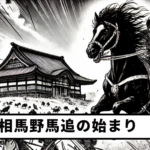
1. The Origins of Soma Nomaoi: Military Training by Lord Taira no Masakado
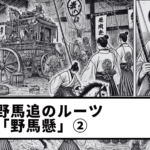
The origins of the Soma Nomaoi date back to the mid-Heian period. It is said to have begun when Lord Taira no Masakado (Soma Kojiro), an ancestor of the Soma clan, captured wild horses in the pastures of Koganehara, Katsushika District, Shimousa Province (present-day Matsudo and Nagareyama, Chiba Prefecture). He then used these horses as stand-ins for enemy soldiers in his military training. The ritual of dedicating the captured wild horses as sacred horses before the gods was passed down through generations of the Soma family as a sacred rite inheriting the traditions of the warrior class.
During the Meiji era, the Nomaki, once a samurai event, faced the threat of extinction. However, through the dedication of local residents, its survival was secured, and the tradition has been preserved to this day.
2. A Grand Three-Day Ceremony
The Soma Nomaki is a grand festival primarily held over three days.
Day 1: Yoinori (Evening Ride)
The first day of the festival involves preparations for departure and rituals in anticipation of the main festival the following day.
• Departure Ceremony: Held at the Soma Three Shrines (Soma Ota Shrine, Odaka Shrine, Nakamura Shrine), which enshrine Myoken, the guardian deity of the Soma family. The mounted warriors depart from their respective districts (gō) in full armor and head for the festival grounds.
• Evening Horse Race: After a ritual to purify the horse course, lightly clad mounted warriors—wearing white headbands, field hakama trousers, and battle jackets—mount their neighing horses and gallop. This serves as a warm-up for the main festival the following day.
Day 2: Main Festival
The heart of the festival is this main event.
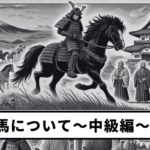
• Procession: Hundreds of mounted warriors clad in armor, bearing banners, march in formation toward the festival grounds at Hibari-ga-hara. This majestic sight evokes the battle scenes of the Warring States period.
• Armored Horse Racing: Armored horsemen gallop along a 1000-meter straight course. This is one of the most spectacular events, testing the horsemanship and mental fortitude of the samurai.
• Sacred Flag Contest: The festival's climax. Hundreds of armored horsemen vie for the sacred flag launched into the sky with fireworks. This is the most intense ritual, carrying the sacred meaning of “seizing the divine.”
Day 3: Nomakake
The final day recreates the ritual of “capturing wild horses,” the origin of the Nomai.
• Nomakake Ritual: Young men in white robes herd the horse captured the previous day with their bare hands, dedicating it as the sacred horse before the deity. This form has remained virtually unchanged since the Edo period and is considered one of the most sacred rituals within the Soma Nomaoi.
3. Passing on Tradition and Looking Toward the Future
The Soma Nomaoi has persevered through unprecedented crises like the Great East Japan Earthquake and the nuclear accident, continuing to preserve its traditions. In recent years, challenges to ensure sustainability continue, including adjusting the event dates to avoid extreme heat and adapting to the declining birthrate and aging population, all to connect tradition to the future.
This festival is not merely a reenactment of history. It will continue to live on in the land of Soma as a symbol of the local community's pride and its resilience in facing adversity.
![[Verification] Tradition or Lives? Background and New Challenges Behind Soma Nomaoi's Shift from July to May](https://en.soma-nomaoi.com/wp-content/uploads/2025/12/第-1-1-300x182.png)