
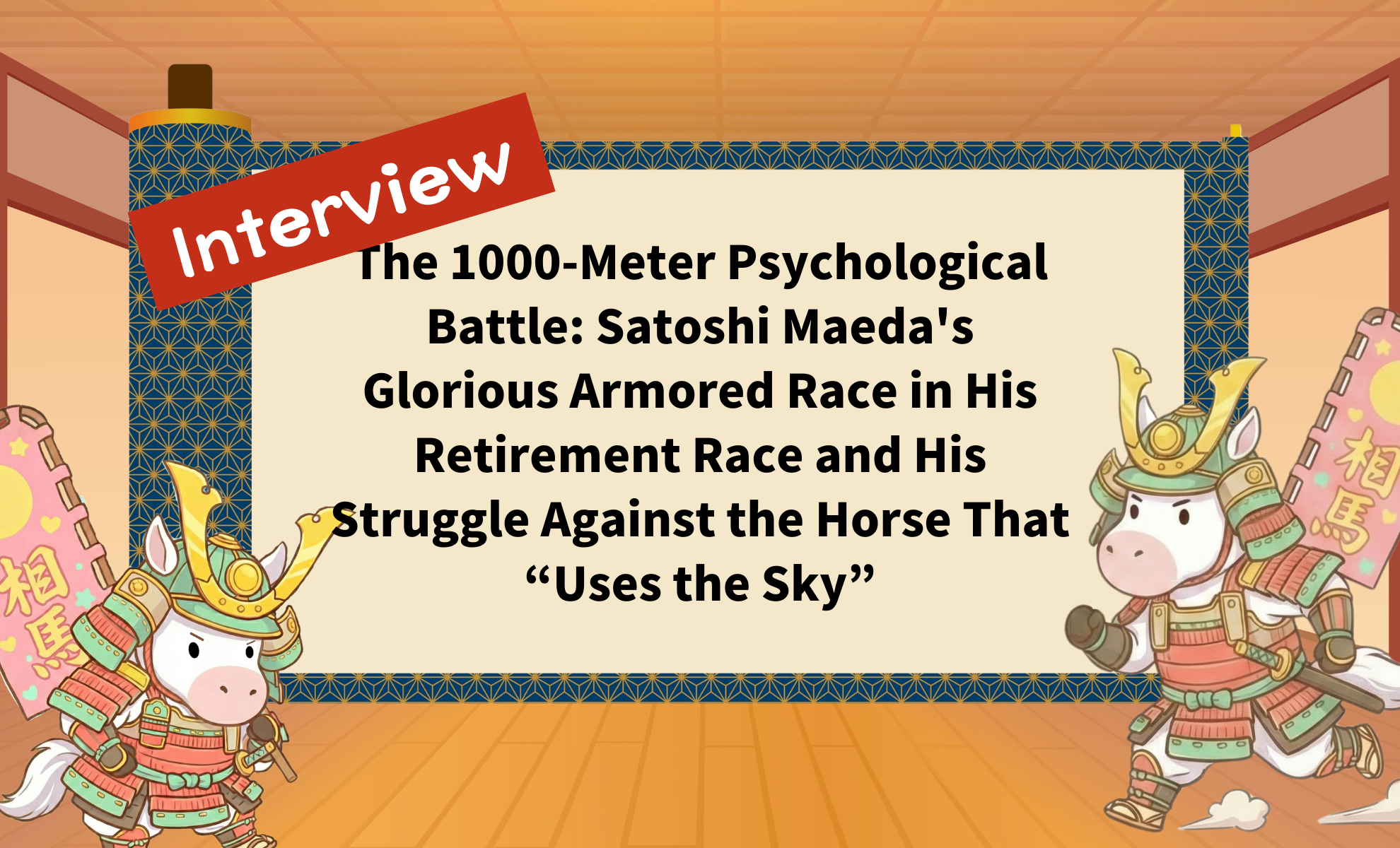
The second day of the Soma Nomaoi festival features the “Armored Horse Race” as one of the highlights of the main festival. Armored horsemen clad in full armor race down a 1,000-meter straight course. This is not merely a contest of speed; it is a “1,000-meter psychological battle” testing advanced strategy, a deep bond of trust with the horse, and above all, the rider's mental fortitude.
Satoshi Maeda of Nakano-go has challenged the pinnacle of this event, the “First Race,” for many years. His battles with rivals, his struggle with the phenomenon of horses “using the sky,” and his dramatic victory in his retirement race. Through an interview with Mr. Maeda, we explore the profound depth of the Armored Horse Race and the essence of a battle fought for samurai pride.
1. The “First Race” Challenged with His Brother and the High Barrier
Q: What were the days like for you, Mr. Maeda, as you persistently challenged the pinnacle of armored horse racing, the “First Race”?
Satoshi Maeda (hereafter Maeda): Armored horse racing is the event within the Nomaoi that draws the most spectator attention. The “First Race,” in particular, is the pinnacle battle where the strongest riders from each district gather. For me, it was a stage where I staked my pride as a warrior.
Q: What did the presence of Mr. Azuma, your long-time rival, mean to you?
Maeda: The presence of Mr. Azuma, another strong rider from Nakano District, was always a formidable wall. My brother Toshifumi supported me as a horse owner, and we tackled it together as a team, but he made us taste bitter defeat many times. I believe it was precisely because of his presence that both I and my horse could aim for greater heights.
2. The Struggle with Horses That “Use the Sky”
Q: Please tell us about the difficulties of the Armored Horse Race, especially the tactics involved with the horses.
Maeda: One challenge in armored horse racing is the phenomenon where horses “lose focus.” This refers to the state where a horse in the lead, having lost its target to chase, relaxes and slows down.
In a 2022 race, the moment I passed my rival Mr. Azuma, my horse lost focus. We were overtaken by an underdog right before the finish line—a bitter defeat. Horses are intelligent creatures, yet also extremely sensitive. Riders must master the skill of reading the horse's mental state and guiding it to maintain focus until the very end.
3. Dramatic Glory in the Retirement Race
Q: Your victory in the final race of 2023, which you entered having decided to retire, was truly dramatic. Could you reflect on the situation at that time?
Maeda: That race was the culmination of my entire career in the Nomaoi.
• Slow start: My timing was off, forcing me to launch from fifth position.
• Sand assault: The sand kicked up by the horse ahead struck my face directly, causing pain severe enough to obstruct my vision.
• The Decisive Moment: From the third corner, I swung wide to overtake. On the straight, I managed to pass my longtime rival, Mr. Azuma.
This victory was a “brothers' triumph” – mine as the jockey and my brother Toshifumi's as the owner who provided the finest horse. Crossing the finish line was an emotional finale, bringing closure to both my long-standing rivalry and my personal battle.
4. The Skills and Mental Strength Required for Armored Horse Racing
Q: What is the most crucial element for mastering armored horse racing?
Maeda: Ultimately, it's the trust between rider and horse, and the rider's mental fortitude. Horses keenly sense a rider's anxiety or hesitation. Amidst the thunderous noise while clad in armor and galloping at full speed, how calmly you can control the horse and convey your will to win—that is the key to mastering the 1000-meter psychological battle.
I hope my victory becomes a source of hope for the young mounted warriors who will challenge the Armored Horse Race in the future.
![[Part 13] Before Starting the Soma Nomaoi School](https://en.soma-nomaoi.com/wp-content/uploads/2024/12/vol13_title-150x150.png)