
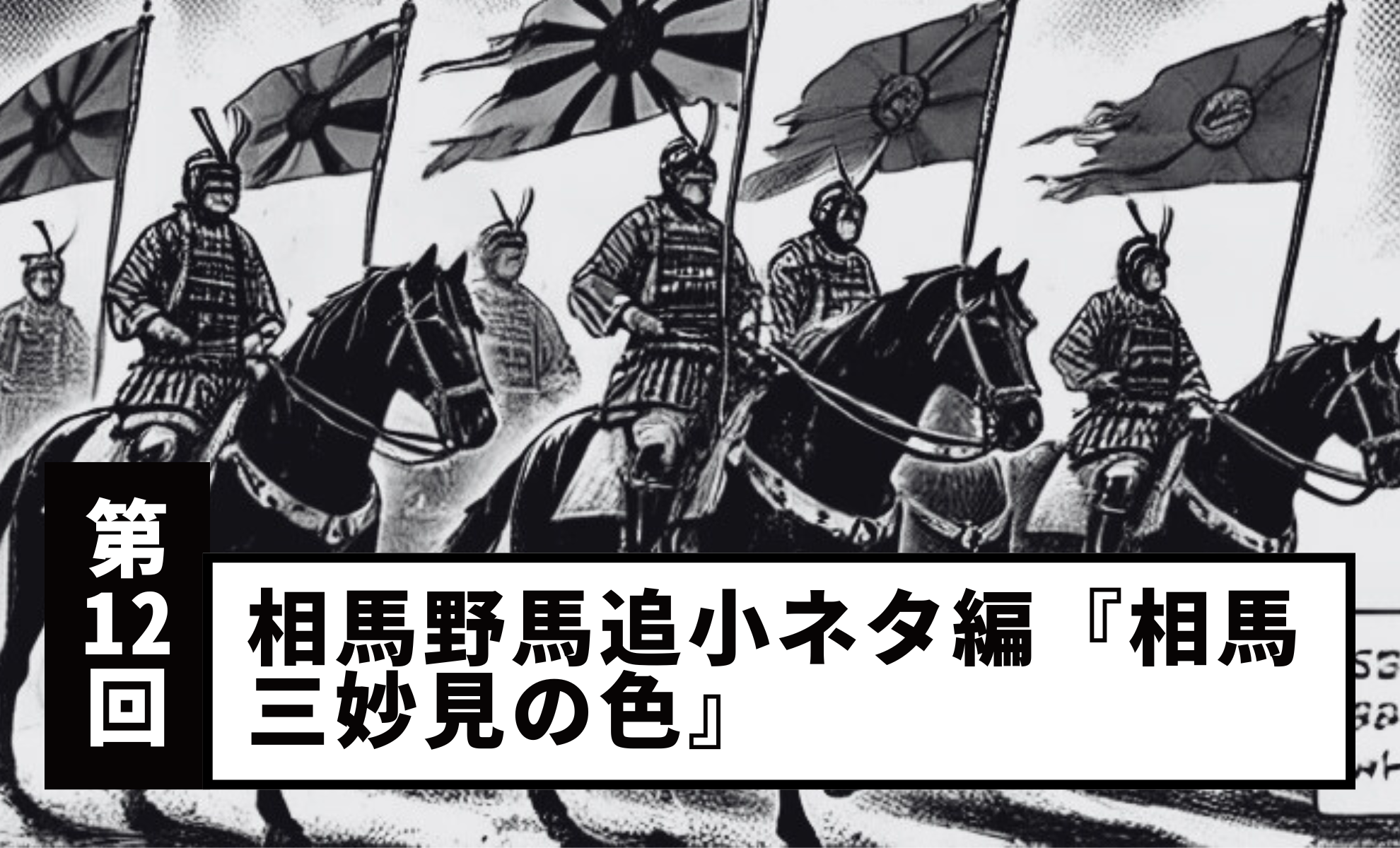
The symbolic event of the Soma Nomaoi festival, the Battle for the Sacred Flags, features colors representing three shrines known as the Sanmyoken. They are color-coded as follows:
Red: Soma Ota Shrine
Yellow: Soma Odaka Shrine
Blue: Soma Nakamura Shrine
These colors appear not only in the Divine Flag Contest but throughout various scenes of the Nomoi. One such instance is the design of the whip carried by the role known as the Gunja.
The Role of the Gunja
The Gunja holds an important position in the Soma Nomoi. Comparable to a managerial role in a modern company, they participate frequently and possess extensive experience. They also serve as instructors, teaching young warriors techniques and traditions.
The whip carried by the Gunja is part of the mounted warriors' equipment, featuring a small flag attached to its tip. This flag uses the colors of the Sanmyoken, with an interesting characteristic: the order of these colors changes depending on the “designated shrine” for that year.
The Colors of the Sanmyoken and Flag Order
The three-colored flags symbolizing the Sanmyoken have the following characteristics:
Color Rearrangement Based on the Designated Shrine
The order of the flags changes depending on which shrine is the designated shrine for that year. For example, if Soma Ota Shrine is the designated shrine, red comes first. When Kodaka Shrine or Nakamura Shrine is designated, yellow or blue comes first respectively.
Meaning of the Three-Color Flags
The three-color flags of the Three Myōken symbolize the sacredness and tradition of the Nomaoi. Even the subtle rule of changing the flag order is part of the profound culture cultivated by the Nomai over its long history.
A Gateway to Deepening Interest in the Nomai
Learning these detailed rules and meanings reveals that the Nomai is not just a festival, but an event steeped in local history and the sentiments of its people. Spectators can also enjoy the Nomai more fully by paying attention to the colors of the Sanmyoken and the order of the flags.
![[Part 13] Before Starting the Soma Nomaoi School](https://en.soma-nomaoi.com/wp-content/uploads/2024/12/vol13_title-300x182.png)
![[Verification] Tradition or Lives? Background and New Challenges Behind Soma Nomaoi's Shift from July to May](https://en.soma-nomaoi.com/wp-content/uploads/2025/12/第-1-1-150x150.png)
![[Part 13] Before Starting the Soma Nomaoi School](https://en.soma-nomaoi.com/wp-content/uploads/2024/12/vol13_title-150x150.png)