

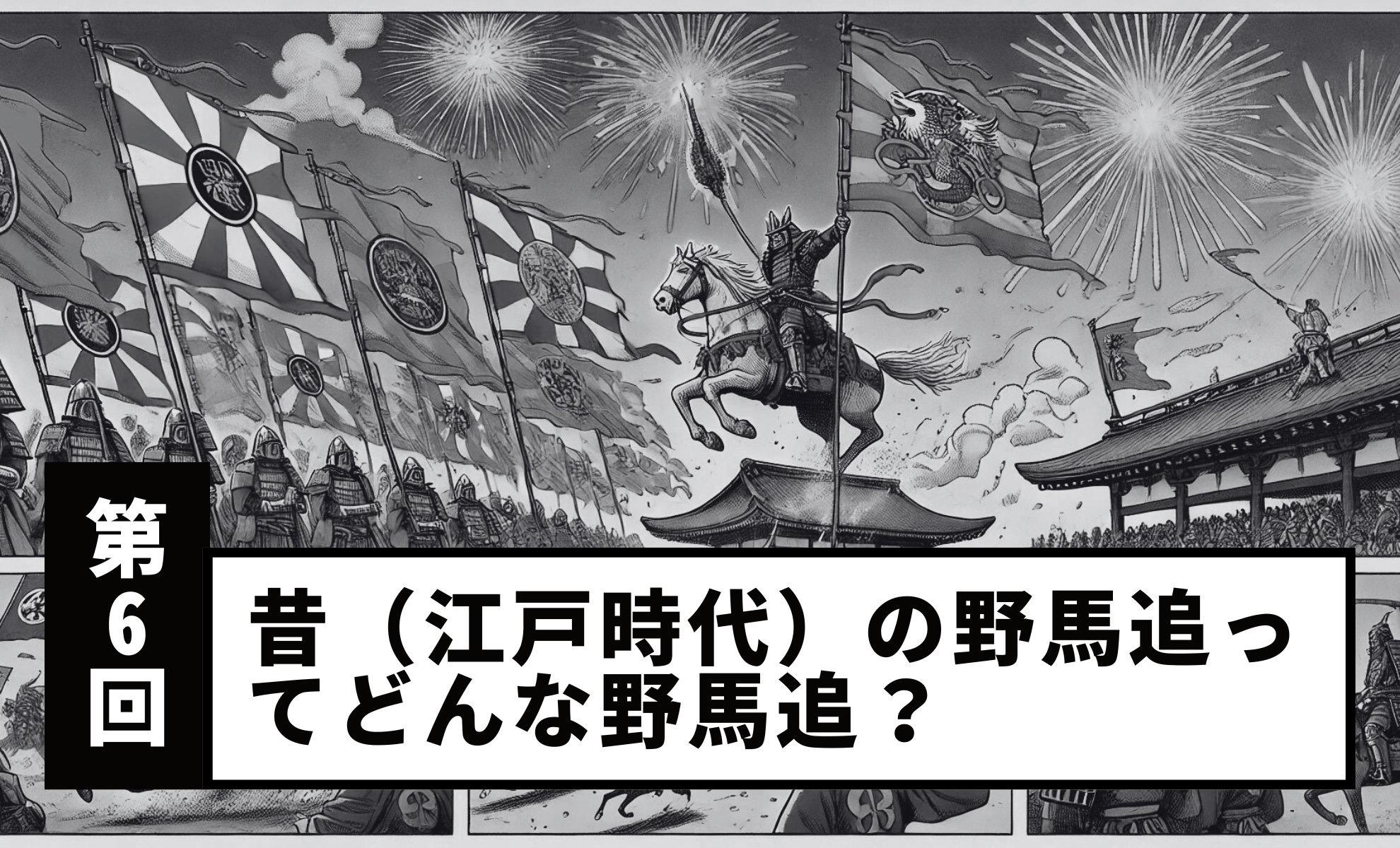
The Soma Nomaoi began not as the grand festival it is today, but literally as an event to “chase wild horses.” At its core lay the faith in the Soma Myoken Three Shrines (Soma Ota Shrine, Soma Odaka Shrine, Soma Nakamura Shrine) and a culture that revered horses as sacred. Let's explore what the Nomaoi was like during the Edo period.
Venue: Nomaihara
The venue for the Edo-period Nomai was, as it remains today, in Haramachi, Minamisoma City. As the name “Haramachi” (literally “plains town”) suggests, it was a land of vast open plains. This area was a large pasture called “Nomaihara,” where wild horses lived.
The horses grazing at Nomaoi-hara were not mere wild animals. They were revered as sacred beings dedicated to the Myoken deity. These horses, likely living leisurely lives otherwise, played a crucial role as part of the sacred ritual: they were captured and offered to the Myoken deity.
The current festival center, “Hibari-ga-hara Festival Grounds,” is located within this Nomai Plain. Here, you can sense the history of the once-vast wilderness.
What is Nomakake?
Nomakake, the climax of the Nomadori, is a traditional ritual dating back to the Edo period. Wild horses, driven by mounted warriors, are led to the Kodaka Myoken Shrine (now Kodaka Shrine). There, they are captured by people dressed in white robes, known as “little people” (okobito), and offered to the gods as sacred horses (shinme). This ceremony is still performed today in almost the same form.
The Wild Horse as a Sacred Horse: Its Subsequent Fate
Hearing “offered to the gods” might make some worry the horse loses its life. However, horses captured in the Wild Horse Suspension are not killed. Instead, a sacred ritual called the “Raising of the Wild Horse” is performed.
The Raising of the Wild Horse Ritual
The Age-no-uma ritual is a ceremony uniting the horse with the Myoken deity. The ritual involves the following steps:
Feeding Rice and Salt
Rice symbolizes abundance, while salt signifies purification. Feeding these to the horse emphasizes its role as a sacred being.
Tying Shide
White, jagged paper strips called shide are tied to the horse's mane. These shide, also seen on shrine sacred ropes and household shrines, signify sacredness. Tying them is believed to unite the horse with the deity, transforming it into a sacred horse.
After this ritual, the horse concludes the festival as a sacred being. The Raising of the Wild Horse is a particularly significant and deeply meaningful part of the current Soma Nomaoi tradition.
![[Part 13] Before Starting the Soma Nomaoi School](https://en.soma-nomaoi.com/wp-content/uploads/2024/12/vol13_title-150x150.png)
![[Verification] Tradition or Lives? Background and New Challenges Behind Soma Nomaoi's Shift from July to May](https://en.soma-nomaoi.com/wp-content/uploads/2025/12/第-1-1-150x150.png)
![[Part 3] Among the warriors participating in the Nomaoi festival, who is the most senior?](https://en.soma-nomaoi.com/wp-content/uploads/2024/10/vol3_title-150x150.png)